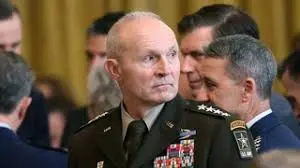
US Defense Secretary Pete Hegseth has asked the us army chief, Army Chief of Staff Randy George, to step down; Chief Pentagon spokesperson Sean Parnell said George “will be retiring from his position as the 41st Chief of Staff of the Army effective immediately. “
What prompted the change for the us army chief?
What is not being told: public statements do not identify a clear operational or disciplinary cause for the removal. Randy George, a career military officer and West Point graduate, was nominated for his role in 2023. Pentagon statements note only that a change in leadership was requested by Secretary Hegseth and that George is retiring effective immediately. The Army chief normally serves a four-year term; the abrupt nature of this departure raises questions about the administration’s criteria for top-level military continuity and the timetable for leadership transitions within the service.
Verified facts and documentation
Verified facts: US Defense Secretary Pete Hegseth asked Army Chief of Staff Randy George to step down. Chief Pentagon spokesperson Sean Parnell said, “George will be retiring from his position as the 41st Chief of Staff of the Army effective immediately. ” Parnell also stated, “The Department of War is grateful for General George’s decades of service to our nation. We wish him well in his retirement. “
Additional verified items from official actors: George served as an infantry officer in the first Gulf War and in recent conflicts in Iraq and Afghanistan. The US Military Academy at West Point posted photos of George meeting with troops, saying he “shared experience-driven guidance with cadets preparing to lead. “
Succession details issued by the Pentagon identify Army Vice Chief of Staff Gen Christopher LaNeve as the acting army chief of staff. Parnell described LaNeve as “a battle-tested leader with decades of operational experience and is completely trusted by Secretary Hegseth to carry out the vision of this administration without fault. “
Contextual fact supplied by Pentagon chronology: since entering the Pentagon, Secretary Hegseth has fired more than a dozen senior military officers, including the Chief of Naval Operations and the Air Force’s Vice Chief of Staff.
Who fills the void and what accountability follows?
Analysis (clearly labeled): Together these facts indicate an administration-wide reshaping of military leadership. The immediate retirement of the Army’s top officer and the swift elevation of the vice chief to acting chief are consistent with a deliberate personnel strategy by Secretary Hegseth. The use of an acting appointment rather than an announced permanent successor preserves flexibility for further changes and reflects urgency in aligning senior military leadership with the secretary’s priorities.
Implications for stakeholders: Randy George’s departure removes an experienced four-decade career officer from the Army’s senior ranks; Gen Christopher LaNeve assumes operational responsibility in an acting capacity. The Department of Defense’s public statements emphasize gratitude and trust in the new acting leader but decline to detail the rationale behind the change. That absence of detail constrains public understanding of whether the move was prompted by policy disagreements, force-management considerations, or other factors.
Accountability conclusion: The Pentagon’s named statements and the facts above justify a clearer public accounting. Government actors named in official statements—Secretary Pete Hegseth, Chief Pentagon spokesperson Sean Parnell, Army Chief of Staff Randy George, and Army Vice Chief of Staff Gen Christopher LaNeve—have provided the record of personnel actions; however, the rationale for asking the Army’s senior officer to step down has not been specified in those statements. For public confidence in military leadership transitions, further transparency from the Department of Defense is warranted about the criteria and process that produced this immediate retirement and acting appointment.
Final note (verified): Secretary Pete Hegseth has initiated a change that removes the sitting Army chief and installs an acting chief; the named officials and institutional statements above constitute the publicly documented record of that action.