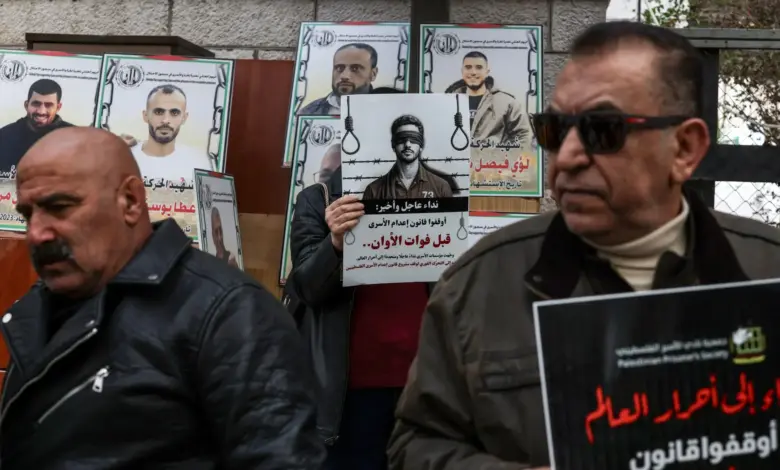
palestine faces an acute inflection point after Israel’s parliament approved legislation to allow the death penalty for Palestinians convicted of deadly attacks, and hundreds rallied across the occupied West Bank to denounce the law.
What Happens in Palestine Now That the Law Has Passed?
The immediate aftermath is defined by two parallel dynamics in the context: a parliamentary majority enacting a new criminal statute and a sharp domestic and international backlash. The Knesset approved the legislation by a 62-48 vote, with Israel’s prime minister voting in support. The bill makes the death penalty the default sentence for Palestinians convicted in Israeli military courts of deadly attacks deemed “acts of terrorism”; executions would be carried out by hanging by prison guards appointed by the Israeli Prison Service, with anonymity and legal immunity for those involved. The text sets a rapid timetable for execution procedures, with sentences to be carried out within 90 days and a possible postponement of up to 180 days.
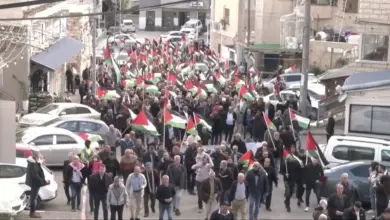
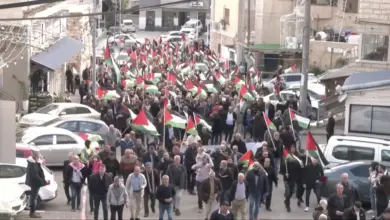
On the ground, hundreds of people protested across several West Bank cities — Ramallah, Tubas, Nablus, Jenin and Hebron — following calls by prisoner advocacy groups. Demonstrations included a sit-in at the courtyard of the International Committee of the Red Cross headquarters in el-Bireh, where participants displayed photographs of prisoners who died in custody over decades. The protests drew families of prisoners, senior members of the Fatah party, civil society organisations, trade unions and women’s groups. More than 9, 500 Palestinians are held in Israeli prisons, including 350 children and 73 women, and human rights groups have long raised concerns about allegations of torture, starvation and medical neglect that have led to dozens of deaths in custody.
What If the Supreme Court and International Pressure Shape the Outcome?
Three plausible trajectories are visible based strictly on the present signals:
- Best case: A legal challenge is heard and the law is blocked or substantially limited. The Association for Civil Rights in Israel has already petitioned the country’s Supreme Court, and the court must consider whether to hear the challenge. Prominent human rights organisations, led by Amnesty International and voices such as Erika Guevara-Rosas, Amnesty’s senior director for research, advocacy, policy and campaigns, have called for repeal on the basis of discrimination and the removal of fair-trial safeguards. Several European governments have expressed concern; that international pressure could sway legal or political outcomes.
- Most likely: The law survives initial challenges but becomes the subject of protracted litigation and diplomatic pressure. National political actors who backed the bill secure a domestic political win, while Palestinian institutions, human rights groups and many international partners intensify condemnation. The court process and political contestation create uncertainty about implementation timelines and practical application.
- Most challenging: The law is implemented in practice, resulting in executions carried out almost exclusively on Palestinians in the occupied territories, a pattern highlighted by critics as discriminatory. German government officials have already signalled they cannot endorse the law, warning it would likely apply exclusively to Palestinians. Critics argue this outcome would deepen claims of breaching international law and widen political and diplomatic fallout.
What Should Stakeholders Watch and Do Next?
Key actors and likely winners and losers are already emerging from the record. Political leaders and parties that pushed the legislation — including senior figures who promoted the bill and celebrated its passage — have secured a legislative victory. Those likely to lose ground include Palestinian prisoners and their families, Palestinian political institutions that condemned the measure for legitimising extrajudicial outcomes, human rights organisations that argue the law is discriminatory, and legal advocates who have mounted challenges.
Institutions and actors to monitor closely: the Supreme Court for decisions on petitions challenging constitutionality and jurisdiction; human rights organisations pressing for repeal and for attention to prison conditions; European governments and international bodies issuing statements and weighing diplomatic responses; and demonstrations and civil-society mobilisation across the West Bank. Observers should track whether the law is applied in practice under the terms described — timelines for execution, the role of the Israeli Prison Service, and the anonymity and immunity provisions for those who carry out sentences — and whether those procedural details prompt further legal or diplomatic pushback.
Readers should expect sustained legal battles, intensified domestic protest, and elevated international scrutiny. The moment crystallises an enduring contest over legal norms, protections for detainees, and whether statutory change will be met by judicial restraint or reversal — a contest that will shape the politics and human consequences of palestine