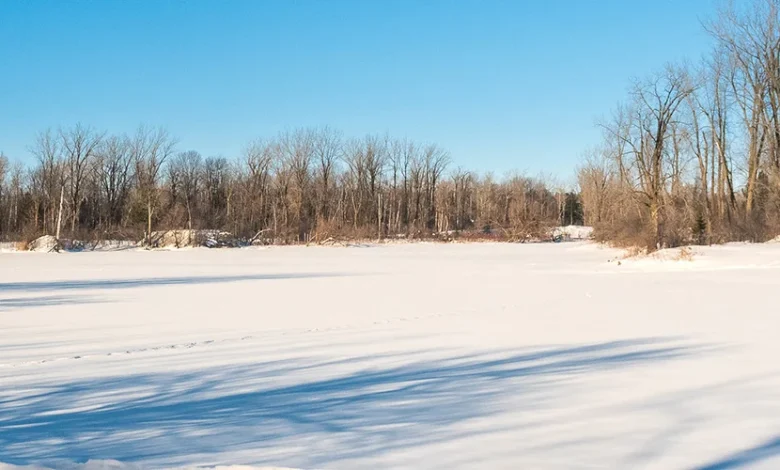
The town of blainville has initiated water-quality testing after several dead fish were reported at the Fauvel lakes; preliminary results point to a low dissolved-oxygen condition beneath the ice as the likely cause.
What do the tests show?
Verified facts: Preliminary measurements conducted in recent days indicate a low level of dissolved oxygen in the Fauvel lakes. The Ville de Blainville mandated the Parc de la Rivière-des-Mille-Îles to measure dissolved oxygen following a report of multiple dead fish. The Parc de la Rivière-des-Mille-Îles, described by the municipality as an organisation with recognised expertise in conservation of natural environments, has previously participated in similar studies, including work in Rosemère. Preliminary findings from these tests are consistent with the hypothesis that low oxygenation under a sustained ice cover could have contributed to the fish mortality. Additional analyses at varying depths have been scheduled to confirm these initial findings.
Why did Blainville’s Fauvel lakes develop this condition?
Verified facts: The Fauvel lakes possess conditions conducive to a phenomenon identified in technical terms as under-ice anoxia. A similar event occurred in the Fauvel lakes in 2014, when fish were deprived of oxygen because of a persistent ice cover. The municipality has been informed that the ministère de l’Environnement, de la Lutte contre les changements climatiques, de la Faune et des Parcs (MELCCFP) also carried out analyses of water quality in the Fauvel lakes to determine the probable cause of the fish mortality.
Analysis: When lakes are covered by persistent ice, oxygen exchange with the atmosphere is restricted and biological oxygen demand within the water column can deplete available dissolved oxygen. The recurrence of a comparable event in 2014 and the current preliminary oxygen measurements together indicate that local physical conditions at the Fauvel lakes can periodically produce dangerous oxygen deficits for fish populations. Confirmation requires the planned depth-stratified analyses; those will determine whether oxygen depletion was widespread through the water column or limited to deeper layers.
Who is involved and what should happen next?
Verified facts: The Ville de Blainville initiated the response after the fish-kill reports and engaged the Parc de la Rivière-des-Mille-Îles to perform initial oxygen measurements. The MELCCFP has performed its own water-quality testing. The municipality will continue to follow the case while further laboratory work and depth-specific field analyses are completed.
Analysis and accountability: The chain of actions — municipal notification, a targeted mandate to a conservation authority, and parallel testing by the environment ministry — establishes a clear investigative path. Public confidence requires timely disclosure of the depth-resolved oxygen data and water-quality results from both the Parc de la Rivière-des-Mille-Îles and MELCCFP. Those datasets will show whether the low oxygen levels detected in preliminary tests are isolated pockets or part of a broader, repeatable pattern that merits changed management of the lakes.
Verified fact: The municipality has stated it will continue to follow the dossier.
Call for transparency: With a prior event in 2014 and current preliminary evidence pointing to under-ice oxygen depletion, the responsible agencies should publish the forthcoming analyses, describe any immediate measures to protect remaining aquatic life, and outline a monitoring plan to detect and mitigate future anoxic episodes at the Fauvel lakes in blainville.