South Pars Gas Field attack sends Gulf energy into crisis: firefighters, markets and mounting debate

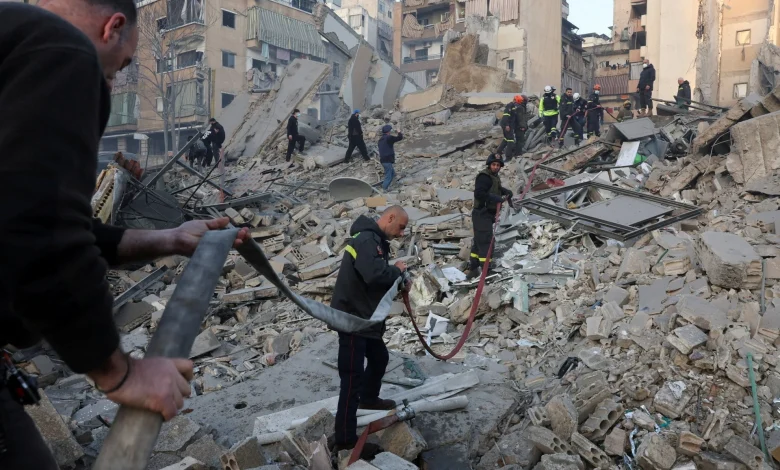
Black smoke billowed over refinery yards as firefighting crews fought to contain blazes at Mina Al-Ahmadi and Mina Abdullah, even as debate spread about the strike on the south pars gas field that set off the latest wave of attacks. The scene — sirens, hoses and workers in heat-streaked helmets — made immediate the human cost of an energy confrontation now rippling through markets and regional politics.
What happened at the South Pars Gas Field?
The strike on the South Pars Gas Field prompted a chain of retaliatory attacks on energy sites across the Gulf. the fires at Kuwait’s Mina Al-Ahmadi and Mina Abdullah followed targeted strikes and that six firefighting teams were battling the blazes. The assault on the gasfield drew sharp public statements from political figures and raised questions about the direction of foreign policy in the region. Mohamad Elmasry of the Doha Institute for Graduate Studies warned that the attack on South Pars has led to growing debate over who is driving U. S. policy in the region.
How are markets and energy infrastructure reacting?
Energy markets moved quickly. Brent crude was observed above the low-$110s in multiple updates, with one account putting Brent futures topped at $115 a barrel and another noting a $113 reading. Natural gas prices surged by roughly 30 percent in some assessments; other summaries described a 25 percent jump. Analysts cautioned that a prolonged closure of the Strait of Hormuz would push prices higher. Vandana Hari, founder of Vanda Insights, cautioned that benchmark Middle Eastern crudes like Oman and Dubai had crossed the $150 threshold in trading and that $200 was “already within sight, ” linking further moves to any extended disruption of shipping through the strait.
Beyond crude benchmarks, consultancy analysis underlined a broader structural impact. Wood Mackenzie described the missile attack on Qatar’s Ras Laffan Industrial City as having “fundamentally” altered the global gas market outlook. The firm noted an extended outage at a major Qatari LNG site could tighten global supply, delay capacity growth and reshape supply expectations through 2027–2028. Wood Mackenzie estimated that Qatari LNG production had been halted since 2 March, removing around 19 percent of global LNG supply — about 80 million tonnes per annum — and warned planned expansion projects could face delays. Kristy Kramer, head of LNG strategy and market development at Wood Mackenzie, said market expectations of a short disruption were weakening and that getting production back to pre-conflict levels would be harder than previously thought.
Who is speaking up and what is being done?
Political leaders and regional officials pushed competing responses. Oman’s Foreign Minister Badr Albusaidi wrote that “America has lost control of its own foreign policy” and urged Washington’s allies to help extricate it “from this unwanted entanglement. ” He framed recent strikes as a setback for a fragile diplomatic opening and described the Israeli and American strike as an “unlawful military strike against the peace that had briefly appeared really possible. ” Separately, there were calls for restraint: one senior political figure called on Israel and Iran to stop targeting energy sites, highlighting a concern that continued attacks would deepen market panic and humanitarian harm.
On the ground, emergency crews worked to contain damage at key facilities while analysts and companies assessed how long outages might last and what the wider supply implications would be. Wood Mackenzie cautioned that a longer-than-expected outage could tighten supply through the rest of the decade, while market watchers said energy prices will depend heavily on whether shipping lanes remain open.
Back at the charred yards of Mina Al-Ahmadi and Mina Abdullah, firefighters doused hotspots and inspectors assessed structural damage. The human image — soot-streaked faces, exhausted crews, families watching from a distance — tied the abstract market spikes and geopolitical statements to immediate harm. The strike on the south pars gas field has altered more than charts; it has forced communities, companies and capitals to contend with the physical and economic fallout of a conflict whose next moves remain uncertain.