A 25% jump in bilateral trade and a stated target of $2 billion sit alongside an explicit offer by Alexander Lukashenko to help build a nuclear power plant — a combination that puts Uzbekistan at the center of an accelerating pact of commerce, infrastructure and labor cooperation.
What is Belarus offering Uzbekistan on nuclear energy?
- President Alexander Lukashenko said Belarus is ready to assist Uzbekistan in building a nuclear power plant and to train specialists, following a meeting with Rakhmatulla Nazarov, Uzbekistan’s ambassador to Belarus, as recorded by the Belarusian president’s press service.
- Belarusian experience cited by Lukashenko includes cooperation with Russia on the Astravets nuclear power plant; Belarusian specialists are also described as working with Russian partners on nuclear projects in several countries.
- Uzatom, Uzbekistan’s Atomic Energy Agency, met with Denis Moroz, Belarusian Energy Minister, in Minsk in August last year to discuss potential collaboration on nuclear infrastructure development, specialist training and radioactive waste management.
Analysis: These verified facts position Belarus as both a technical partner and a training provider. The invitation for Uzbek representatives to meet Belarusian specialists and the prior Uzatom–Denis Moroz discussions indicate institutional channels are open for nuclear cooperation and capacity building. The available evidence shows a deliberate sequencing: ministerial talks, public offers to host specialists, and an explicit presidential invitation to inspect competencies.
Are trade promises matching the nuclear and labor overtures?
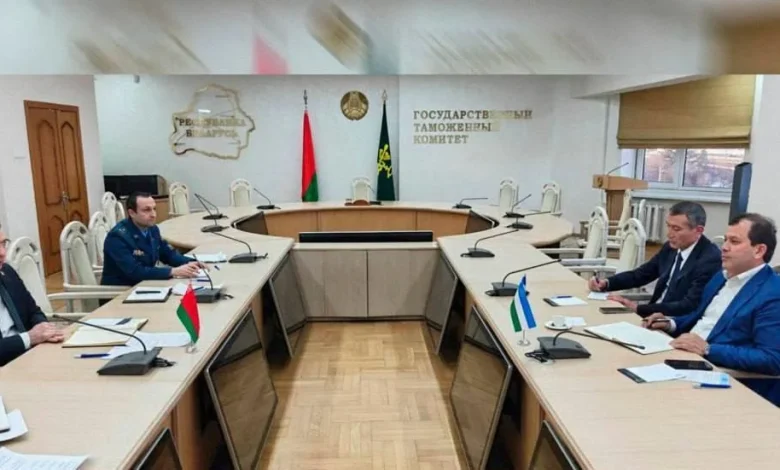
President Lukashenko has set a bilateral trade target of $2 billion, framing the relationship as complementary across agriculture, machine building and other sectors. A meeting between Davron Vakhabov, Chairman of the Chamber of Commerce and Industry of Uzbekistan, and Vladimir Orlovsky, Chairman of the State Customs Committee of Belarus, emphasized simplifying logistics and customs procedures to support growth.
Trade momentum is tangible in the record: trade turnover between the two countries increased by 25% in 2025, reaching nearly $1 billion, and contracts worth almost $110 million were signed during a Belarusian government delegation’s visit to Uzbekistan in February 2026.
Analysis: The economic data and institutional talks suggest concrete steps toward the stated $2 billion goal. Simplifying customs and logistics addresses practical barriers to scaling exports, while the recent contracts and delegation visits demonstrate that rhetoric is being converted into deal-making. The combination of industrial cooperation, nuclear ambitions and streamlined trade procedures indicates synchronized policy priorities on both sides.
Who benefits — and what accountability is needed for the Uzbek workforce?
Alexander Lukashenka has publicly invited citizens of Uzbekistan to work in Belarus, stressing that migrant workers are offered access to nurseries, kindergartens, schools and higher education on equal terms with local residents. He framed the offer as a response to Belarusian labor shortages and described a preference for family workers. The Belarusian position on welcoming migrants was contrasted with earlier controversy tied to a statement about accepting 150, 000 Pakistanis that generated public reaction while only a small number arrived.
Analysis: The verified commitments on worker services and training dovetail with the broader agenda: Belarus offers jobs and social services, Uzbek authorities have engaged in trade and customs talks, and energy cooperation offers specialist training pathways. This alignment can create mobility and skills transfer opportunities for Uzbek citizens, but it also raises clear governance questions that are already evident from the context.
Accountability and next steps: The facts on the table call for formal, published agreements that define the scope of nuclear cooperation, the parameters of specialist training, the terms of labor recruitment and the oversight mechanisms for both. Relevant institutions named in these engagements — the Belarusian president’s press service, Denis Moroz as Belarusian Energy Minister, Uzatom, the Chamber of Commerce and Industry of Uzbekistan, and the State Customs Committee of Belarus — should make cooperative frameworks and worker-protection provisions transparent to enable independent review and parliamentary scrutiny. Only explicit, verifiable protocols will match the scale of the offers and the economic momentum now visible in Uzbekistan.
Verified facts are distinguished from informed analysis above; remaining uncertainties should be resolved through publication of the formal agreements and institutional commitments tied to the initiatives referenced here for Uzbekistan.