kharg island has remained untouched amid a recent US‑Israel bombing campaign in the Persian Gulf, a deliberate restraint U. S. and Israeli forces have so far maintained to avoid a global market shock. The five‑mile coral island, a terminal for the vast majority of Iran’s crude exports, sits off Iran’s coast and has been left intact because experts warn an attack would remove a critical share of global supply. Those warnings focus on widespread price disruption and long repair times if the facility were damaged or taken offline.
Kharg Island’s strategic value
Kharg Island handles roughly 90% of Iran’s oil exports and is where pipelines from Iran’s central and western oilfields terminate. The island’s eastern shore holds large loading jetties that reach deep water, allowing very large crude carriers to load directly. Typically between 1. 3 million and 1. 6 million barrels a day pass through the terminal; volumes were reportedly increased to around 3 million barrels a day in mid‑February as a precaution. A further 18 million barrels are held on the island as backup storage. The installation was originally established by a U. S. oil conglomerate and was seized by Iran during the 1979 revolution.
The sheer concentration of exports on a single site is the core strategic fact: the loss of that capacity would amount to taking the entirety of a national daily export stream offline and would therefore ricochet across global markets.
Immediate reactions from officials and analysts
Neil Quilliam, with Chatham House, warned of steep price rises if the site were attacked: “We may see the $120 a barrel price we saw on Monday heading to the $150 if Kharg were attacked. ” Michael Rubin, a senior Pentagon adviser on Iran and Iraq in the George W. Bush administration, framed seizure as an economic lever: “If they can’t sell their own oil, they can’t make payroll. ” Lynette Nusbacher, a former British army intelligence officer, cautioned that destroying Kharg “runs the risk of causing an economy‑shaping increase in oil price that would not drop rapidly. ”
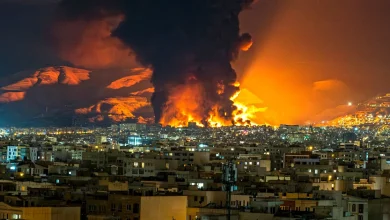
U. S. military activity in the broader campaign has struck thousands of targets in and around Iran but has so far avoided direct strikes on oil infrastructure; at the same time, Israeli strikes hit two refineries and two depots, producing major disruption in the capital. The U. S. defence secretary, Pete Hegseth, has not ruled out ground operations as part of broader options under consideration.
What’s next — risks and watchpoints
Decision makers face stark choices: destroy or capture Kharg Island and risk a sustained, economy‑shaping spike in global oil prices, or continue to spare the site and accept the strategic leverage it gives Iran. Media commentary has hinted at consideration inside the U. S. government of seizing the terminal, and some former advisers have argued seizure could cripple Tehran financially. The interconnected nature of the market means any permanent loss in Kharg output would push prices worldwide, while repair of complex export infrastructure could take years.
Watch for any change in targeting posture around the terminal and for statements from officials that move beyond the current restraint. The future of kharg island — whether left intact, struck, or seized — will directly shape oil markets and the diplomatic stakes in the region.