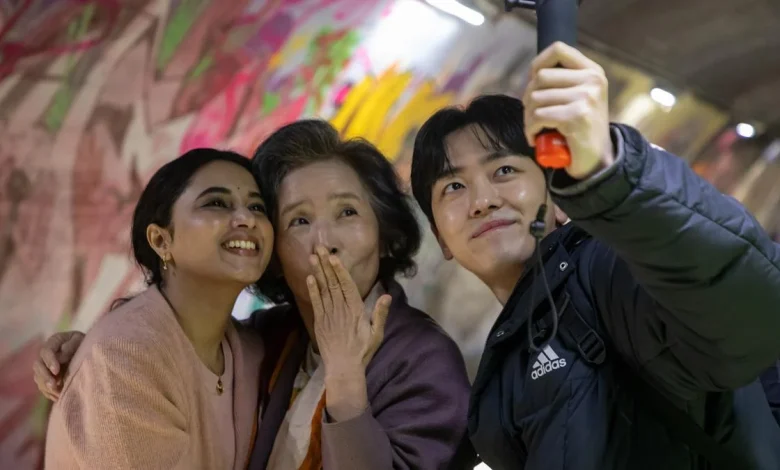
made in korea follows Shenbagam (Shenba), a small‑town Tamil woman whose childhood fascination with Korean culture propels her to Seoul. The film repeatedly stages the excitement of that fascination — posters, fandom gestures, a song montage through tourist sites — yet key questions about why Shenba is obsessed with K‑culture remain unanswered on screen.
What is not being told?
Verified facts: Priyanka Arul Mohan, actor in the film, plays Shenbagam. Ra Karthik, director of Made In Korea, has said he drew on his own experience as a first‑time visitor to Seoul while shooting. Park Hye‑jin, actor in the film, appears as the bedridden elderly woman Shenba cares for; Shenba finds work as a helper in that household. Kim Min Ha, South Korean actress, joined the Korean dubbing cast and has described the dubbing assignment as her first such role.
Analysis: The film gives clear anchors for Shenba’s journey — a school fancy dress moment that seeds curiosity, bedroom posters of Korean stars, and one narrated montage of Seoul landmarks — but it rarely explains the emotional anatomy of her fandom. Viewers learn what she consumes (posters, K‑pop, language lessons) rather than why those artifacts matter to her inner life. The production testimony supplied by Ra Karthik and the on‑screen choices together expose a contradiction: a film about cultural longing that treats the objects of longing as décor rather than as forces that transform a character’s sense of belonging.
How Made In Korea stages cross‑cultural exchange
Verified facts: Scenes drawn from the director’s first‑time Seoul experience are among the film’s most observational moments — Shenba is shown learning local norms such as standing in a queue for a bus, and she befriends a vlogger who helps her navigate the city. Priyanka Arul Mohan, actor in the film, described significant language barriers on set; English‑speaking assistants and production staff helped bridge communication with local actors. The production also created a Korean dub for the film with Kim Min Ha voicing Shenba in that version.
Analysis: Those production details point to two competing impulses. On one hand, the filmmakers aimed for textured realism: language friction, small civics like queues, and an intergenerational friendship with an elderly woman (Park Hye‑jin’s character) are concrete ways to depict acculturation. On the other hand, the narrative framing often sidelines the explanatory work that would let the audience share Shenba’s subjectivity. The choice to produce a Korean dub, with Kim Min Ha taking on a voice role she called meaningful, amplifies this tension. Dubbing extends the film’s reach and signals goodwill toward cross‑cultural exchange, yet the core screenplay does not consistently convert curiosity into comprehension: the dubbed audience hears Shenba’s words, but the script gives them little additional interior logic to grasp why she was drawn so fully to Korea in the first place.
What the ending and creative choices reveal
Verified facts: The film avoids a conventional romance and instead concentrates on Shenba and the elderly woman’s shared project of reclaiming identity and embarking on self‑discovery. The film’s conclusion leaves a question about whether Shenba will remain in Seoul or return to her hometown in Tamil Nadu; discussion of that ending has focused on her journey from betrayal to independence. Kim Min Ha described dubbing the role as unfamiliar but meaningful; Priyanka Arul Mohan, actor in the film, described how language barriers were overcome on set through English‑speaking crew members.
Analysis: The deliberate refusal to make romance the center of Shenba’s arc is one of the film’s most defensible risks: it reframes the story as an inward reorientation rather than a sentimental relocation. Yet the same restraint requires compensatory depth elsewhere. The film supplies moments of everyday realism and the tactile surprises of being abroad, but it does not fully translate Shenba’s fandom into a sustained motive for the choices she ultimately faces. The presence of a Korean dub and a well‑known Korean voice artist signals an ambition to internationalize the character’s experience. That ambition exposes how much narrative economy still matters: global distribution can carry a story wider, but it cannot supply the interior detail that would make a cross‑cultural obsession feel fully earned.
Verified fact: The film premieres on an over‑the‑top streaming platform in March 2026. Analysis: As the film reaches wider audiences through subtitling and dubbing, the unanswered questions about Shenba’s emotional logic will matter more — especially for viewers who share her fascination and seek a mirror for it. If the film’s strongest scenes are those rooted in the director’s lived encounters in Seoul, then the clearest reform is editorial: deepen the scenes that probe why K‑culture mattered to Shenba, and let the very objects of fandom become drivers of change rather than mere set dressing. made in korea frames a believable yearning; it stops short of explaining its force.