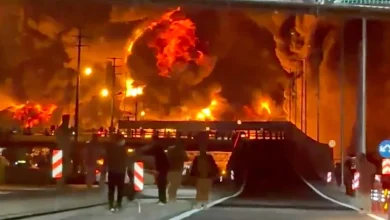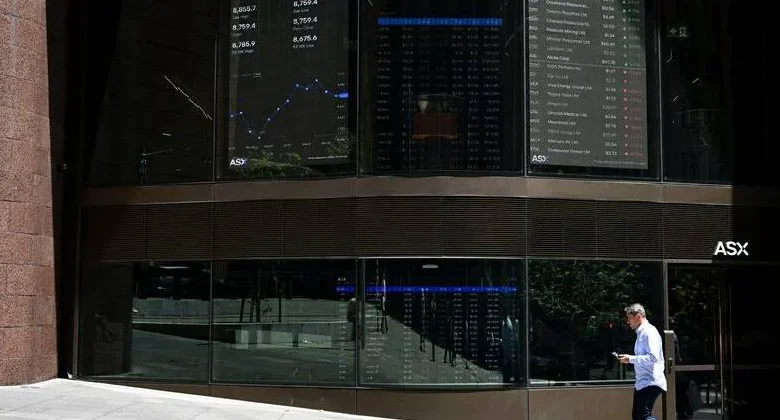
asx stocks plunged as the US-Israeli war on Iran intensified, wiping nearly $100 billion from market capitalisation. The S&P/ASX200 was down 3. 2 per cent to 8, 566. 3 in early trading on Monday (ET), the lowest level since mid-December. The sell-off was driven by Brent crude spiking to $US107 a barrel and fears of energy supply shocks through the Strait of Hormuz.
Asx market fallout
The sell-off hit every sector except energy. Materials led the losses, falling 4. 7 per cent, while the benchmark index lost almost $100 billion in market value as the ASX200 headed for its worst day since April 2025 when the index plunged 4. 2 per cent. Major miners were among the steepest decliners: BHP retreated 5. 4 per cent, Rio Tinto fell 4. 2 per cent and Fortescue lost 3. 4 per cent. Copper miners suffered extreme moves, with Sandfire and Capstone each down slightly over nine per cent.
Bank stocks were deeply in the red, with Commonwealth Bank down 3. 8 per cent, NAB and Westpac each losing 3. 4 per cent and ANZ down 3. 1 per cent. Gold failed to act as a clear safe haven in morning trade, changing hands at $US5, 082 an ounce, down $75 from Friday; gold miners Evolution and Northern Star fell 5. 0 per cent and 4. 3 per cent respectively. Energy remained the only sector in positive territory, lifting as oil prices surged—Woodside rose 2. 0 per cent, Santos climbed 2. 1 per cent and Whitehaven Coal gained 3. 1 per cent, while Karoon Energy was the biggest gainer on the ASX200, up 9. 1 per cent.
Just seven companies, all in the energy sector, were trading in the green out of the 200 in the benchmark at about 11am (ET).
Immediate reactions
Kyle Rodda, Capital. com analyst, framed the market response in stark economic terms: “Increasingly, energy supply is being threatened, mostly due to disrupted trade flow through the Strait of Hormuz, but now increasingly because of attacks on energy infrastructure as a tactic of war. ” His assessment tied the sharp moves in oil and equities directly to strategic disruptions in trade and energy infrastructure.
What’s next
The local share market collapse and the spike in Brent crude reflect a market now focused on oil markets and the risk of supply shocks. Traders will watch whether the conflict widens and whether attacks on energy infrastructure continue, as Kyle Rodda warned, because those developments will be central to near-term price action and volatility in the asx.