Joao Fonseca: From packed side courts to Indian Wells center court, a turning point for a young Brazilian

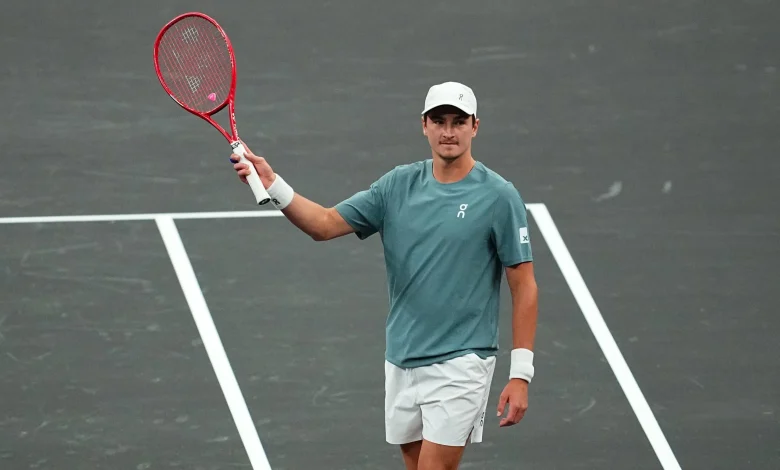
Under the pale desert light of the California complex, joao fonseca will step onto the center court for the first time after climbing into the third round of the Masters 1000 at Indian Wells. The moment arrives not just because of his rise in the draw but because his next opponent—an American seeded among the event’s prominent names—brought the match to the main stage.
How did joao fonseca get here?
Joao Fonseca, a 19-year-old Brazilian and world No. 35, reached the third round by overturning a match against a much higher-ranked opponent. Facing Karen Khachanov, then the world No. 16, Fonseca saved two match points in the second-set tiebreak and recovered to win in three sets, with the final scoreline coming after a recovery from an opening set loss. That victory was the first time he advanced to the third round of a Masters 1000 event.
“It was a very important match, against a very experienced player with many titles and a brilliant career. After the first set, when he dominated me and I couldn’t find myself, staying there in the second having some opportunities, almost losing the match, and then to seek, turn it around… These are the matches that make you grow as a player. I’m very happy with how I fought, ” said João Fonseca, Brazilian tennis player and world No. 35, reflecting on the comeback.
Why is Joao Fonseca playing on the central court?
The slot on the central court came as a result of the draw and scheduling: when Fonseca clinched his place in the third round, the match was already slated for the complex’s biggest stage. His opponent in the next match, Tommy Paul of the United States, is a leading figure in American men’s tennis and is listed among the tournament’s headline players. The pairing closes the day’s play at the venue, elevating Fonseca from the smaller courts that had been packed for his earlier matches to the sport’s primary arena at Indian Wells.
Tommy Paul, ranked No. 24, brings an established résumé: an Olympic bronze medal earned in the doubles competition and a previous presence inside the top 10 of the world rankings. He has claimed multiple tour titles, including an ATP 500-level crown. These credentials help explain why the match between the young Brazilian and the American drew placement on the center court.
What does this moment mean for Fonseca and the broader story?
For Fonseca, the sequence of matches at Indian Wells stitches together social and sporting threads: a teenager navigating the pressure of a vast tournament, a crowd that has already choked smaller courts for his earlier appearances, and a sudden invitation to perform under the watchful lights of the center stage. The upset over a top-20 opponent is both a sporting milestone and a marker of growing visibility for a player moving through the professional ranks.
Humanly, the arc is familiar but still fragile: a dramatic late escape from elimination, the adrenaline of a comeback, and then the prospect of meeting a local favorite with a substantial track record. The scheduling that placed Fonseca on center court also speaks to tournament logistics and star power—matches involving home-country standouts or established names often land on the largest stages, offering younger challengers an amplified moment.
On the economic and professional front, playing on center court can change exposure for a player like Fonseca—more eyes in the stadium, increased photographic coverage, and the intangible lift of performing on a premier stage. For a 19-year-old who had already filled smaller courts with supporters, the switch to the main arena is a step toward broader recognition.
The immediate challenge is concrete: Fonseca will face Tommy Paul in the next round, a match that was scheduled for the day’s final slot at the complex. The American’s experience and previous victories over Fonseca on tour present a stern test; for Fonseca, the upset over Khachanov provides both confidence and a warning about the thin margins at this level.
Back where the scene began, the center court will now host the next chapter. joao fonseca arrives with his signature resilience, a recent escape from defeat, and the knowledge that his place on Indian Wells’s biggest stage was secured by the pairing with a prominent U. S. rival. Whether this night becomes a watershed or a learning moment will unfold under those lights—one serve, one return at a time.