tesla canada has emptied its Canadian Model 3 inventory, sending US-built units back to the United States as Ottawa opened a new Chinese EV import program on March 1 ET. The move follows a government quota allowing up to 49, 000 China-built electric vehicles into Canada over the next 12 months at a 6. 1% tariff. Retail and certification records show automakers and their authorized representatives can now file shipment-specific import permits under the new framework.
Tesla Canada clears lots and shifts supply
Dealers and inventory listings show the Model 3 section in Canada has been vacated, with the remaining US-built cars moved out of the Canadian market and returned south. The change tracks with the federal rollback of the earlier tariff barrier and the formal launch of the import-permit program on March 1 ET, enabling lower-tariff access for China-built models. Transport Canada certification entries referenced in government records indicate Shanghai-built Model 3 and Model Y units are already certified for import, creating an immediate pathway for reintroduction of lower-cost inventory.
Federal quota rules and timing
Under the framework published by Global Affairs Canada, the new quota permits up to 49, 000 China-built EVs over the next 12 months at a 6. 1% most-favored-nation tariff, replacing the prior 106. 1% tariff rate. The first allocation allows 24, 500 vehicles to enter on a first-come, first-served basis between March 1 and August 31; a second allocation covers September 1 through February 28, 2027, and includes any unused first-half permits. Import permits are shipment-specific, valid for up to 60 days, and can be filed up to 30 days before a shipment’s expected arrival. Only original equipment manufacturers or their authorized Canadian representatives may apply for permits, excluding grey-market importers.
BYD registrations, certification gaps and industry positioning
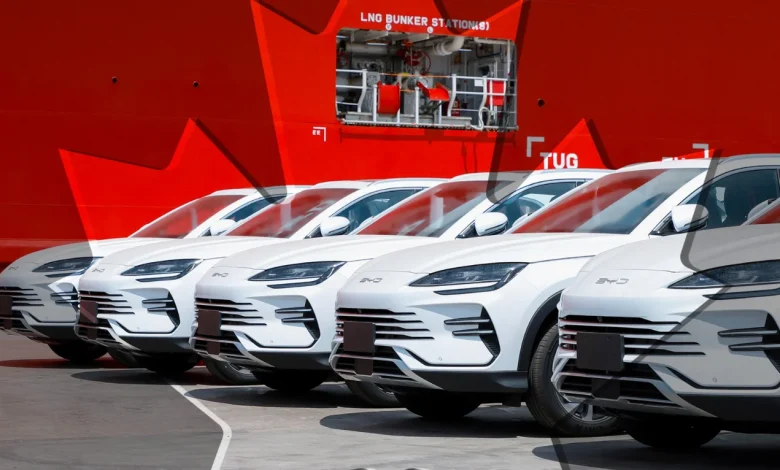
Transport Canada’s Appendix G registry shows BYD Co. has registered passenger vehicle factories, listing two new passenger car entries for manufacturing sites in Shenzhen and Xi’an as of Thursday morning ET. Separate BYD entries for buses and trucks predate the passenger car listings. BYD already operates a 45, 000-square-foot electric bus assembly plant in Newmarket, Ontario, supplying city transit operators. As of Thursday morning ET no other major Chinese passenger car manufacturer—Nio, XPeng, Chery or Geely—appeared in the Appendix G registry. Records also indicate competitors will need time for certification: certification timelines remain a gating factor, with some manufacturers still requiring additional weeks before imports can commence.
Immediate reactions and what comes next
Samantha Lafleur, Global Affairs Canada spokesperson, said there is “no predetermined limit” on the number of permits per automaker and that the department “will monitor the application and issuance of import permits for the purpose of providing equitable access to the quota to eligible applicants. ” On the question of export controls, Lafleur said Global Affairs was “not aware of any export-permit mechanism that might be administered by China. “
With permits now live and the first allocation on a first-come, first-served basis, automakers and authorized representatives are expected to file shipment-specific applications under the 60-day permit window. The immediate certainty is procedural: import permits can be filed up to 30 days before expected arrival and may determine which factories and models reach Canadian showrooms first. For consumers and dealers, the next developments to watch are permit issuances, Transport Canada certification listings, and how quickly imported China-built inventory appears in market channels.
tesla canada’s inventory move underscores how rapidly supply chains can shift under changing tariff and quota rules; the unfolding permit allocations and certification updates will determine the pace at which lower-tariff China-built EVs return to Canadian roads.