Power Outages after the February 2021 Freeze: Local Outages and New Research Signal Economic Risks

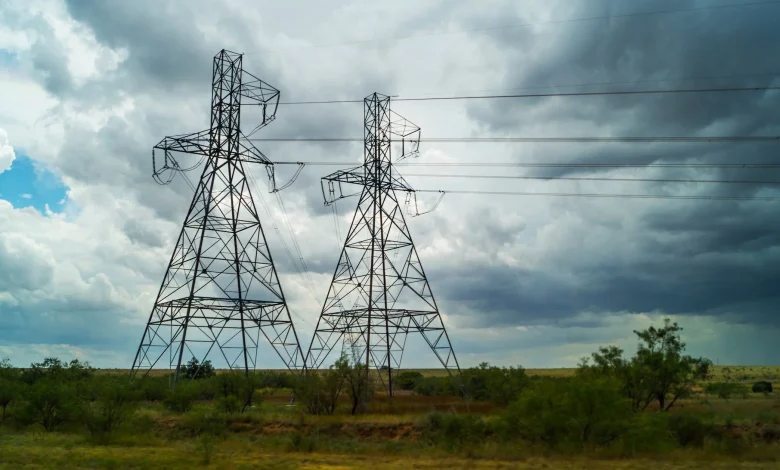
power outages are increasingly framed as a material economic factor after academic analysis and localized outage reports highlighted measurable effects on housing markets and regional economies. The moment is an inflection point because a university study quantifies large-scale value losses linked to reliability, local utility outage maps show ongoing interruptions, and uptake of battery storage is changing how households and markets respond.
Power Outages and the housing market: what the study shows
Researchers at Texas Tech University examined how interruptions of electric service influence regional economic growth and housing prices. Bradley Ewing and Zachary Keeler of the Jerry S. Rawls College of Business led the analysis and found that counties with shorter and fewer interruptions tended to have stronger employment growth, while reliable power supported local business activity. The study identified normal operating interruptions as a downward pressure on housing prices and estimated that increasing the average minutes customers experience during an outage by one standard deviation would cause more than $113 billion in lost home values.
That finding reframes power reliability from an operational challenge into a factor homebuyers and local officials must weigh when evaluating market health. The researchers noted that better restoration times and fewer interruptions should be considered in policy and planning, and that buyers can factor reliability into location and valuation decisions.
What forces are reshaping risk from outages?
Local outage tracking and resilience measures illustrate the forces at work. Utility outage maps show multiple, localized interruptions tied to windy conditions; crews are routinely assigned to repair lines, and some incidents affect very small customer counts while others span wider areas. Historical system failures in the recent past left millions without power during a severe winter freeze and coincided with significant loss of life, underscoring that extremes can cascade into human and economic harm.
At the same time, technology and market responses are altering exposure. Battery storage offers a household-level hedge: it allows homeowners to store energy when prices are low and use it during demand spikes or interruptions, and has been recommended as a way to protect key appliances during outages. Industry data show growing pairing of residential solar and batteries in some states, and home-focused battery products are being marketed for both renters and homeowners as lower-cost partial backups. Platforms that help shoppers evaluate solar and storage options advertise potential lifetime savings on solar installations and emphasize the role of storage for resilience.
What happens next — three scenarios and actionable steps
- Best case: Policymakers and utilities prioritize restoration times and reliability metrics, battery and rooftop solar adoption accelerates, and homeowners use partial or full backups to blunt value losses. Local businesses see steadier operations, supporting employment growth in line with the study’s findings.
- Most likely: Incremental improvements in outage response occur while adoption of battery-backed solar grows unevenly. Some neighborhoods and counties realize protection and stable property values, but other areas remain exposed to interruptions that suppress housing prices and local economic momentum.
- Most challenging: Systemic failures similar to the severe winter freeze recur or coincide with extreme weather, producing widespread disruptions, human costs, and the continued erosion of home values—compounding the more than $113 billion in lost home value scenario the study models.
For stakeholders the implications are direct. Homebuyers should factor reliability into purchase and valuation choices; local officials should incorporate service reliability into economic planning; and homeowners seeking mitigation can evaluate battery storage options that protect core appliances without full-house backups. Researchers’ conclusions point to policy levers and market tools that can change outcomes if pursued deliberately.
Uncertainty remains about the pace and distribution of technological adoption and about how utilities will prioritize reliability metrics, so outcomes will vary across geographies. The clear takeaway for readers is to assess local outage histories, consider resilience investments, and ask elected officials how they will address the economic stakes tied to power outages