f1 teams are entering 2026 amid a concentrated push to embed artificial intelligence across weather forecasting, race strategy and officiating systems — a shift that combines genuine technical promise with fresh operational questions.
What Happens When F1 Teams Turn to AI?
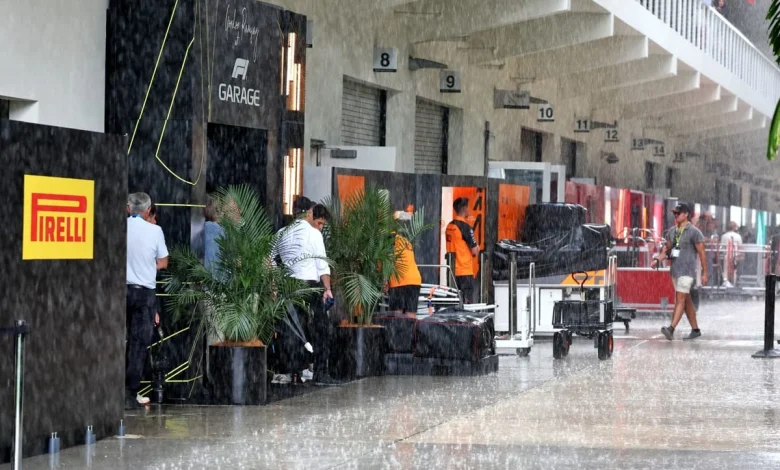
One near-term inflection is the adoption of AI-driven weather forecasting. A satellite-backed, AI-driven model developed by Tomorrow. io has been positioned to provide faster, cheaper, more accurate and super-localised forecasts than the physics-based numerical models used previously. That capability is being made available to teams through new weather portals on the pitwall and has been integrated into how the FIA runs grand prix weekends.
Itai Zlotnik, co-founder of Tomorrow. io, framed the change as a rapid acceleration in atmospheric modelling, saying that AI has dramatically shortened development cycles and enabled pattern detection across years of historical data. The outcome should be more accurate, detailed and reliable forecasting for teams, and an improved evidentiary base for race control when making decisions on Heat Hazards and Rain Hazards.
Chris Bentley, the FIA’s head of information systems strategy, described the flow of information into race operations: “They give us information before a session, during a session and update us constantly. ” That continuous feed is intended to help schedule, reschedule and change session running when weather conditions make planning challenging.
What If AI Runs More Race Decisions?
On the officiating side, a semi-automated platform called ECAT (Every Car All Turns) will integrate with existing race management software to detect track-limit breaches. The system pairs computer vision with micro-sector lap data to compare car positions against a reference model, automatically flagging incidents for review. Up to 95 percent of cases are expected to be filtered by the software before reaching race control, while stewards retain final authority.
Bentley explained that ECAT is built around a centralised camera controller that allows consistent distance setting and distributed processing: the network can run computer-vision workloads on multiple machines, send video segments for analysis and receive results rapidly. The stated aim is improved consistency and clearer visual evidence available to teams and stewards.
Alongside these operational tools, several teams in 2026 now include AI-focused partners in their technical stacks, reflecting a broader adoption of AI in strategy, simulation and data analysis.
What If Different Futures Unfold?
- Best case: AI weather models and ECAT improve predictability and consistency. Teams use reliable pitwall portals to make smarter tactical calls; race control uses richer, faster evidence to minimise unnecessary delays and make better restart decisions.
- Most likely: AI delivers clear operational benefits but requires iterative refinement. Forecasting improves in many locations, ECAT cuts the volume of straightforward track-limit cases, and stewards still arbitrate edge cases while processes and trust mature.
- Most challenging: Mismatches between AI outputs and on-track reality expose algorithm limits. Overreliance on automated filters or imperfect models could create contested outcomes and require additional manual review or system adjustments.
These scenarios are grounded in two concurrent developments: the deployment of AI-driven weather forecasting by Tomorrow. io as a core input to race operations, and the rollout of the ECAT platform to semi-automate track-limits enforcement. Both changes increase the speed and volume of machine-produced insights, and both place a premium on how humans validate and act on those insights.
What Happens Next for f1 teams?
Practical steps are already implicit in the shift. Teams and race control will need to embed AI outputs into decision workflows, invest in pitwall displays and data-handling pipelines, and develop protocols for when automated flags require steward review. The FIA’s integration choices — centralised camera control for ECAT and the adoption of Tomorrow. io forecasts for session planning — indicate an operational trajectory: more machine analyses, faster flagging and continued steward oversight.
Uncertainty remains. Some industries have seen overpromised AI deployments fail to deliver, while these specific tools are presented as delivering tangible change. Stakeholders should treat the introduction of these systems as a process of iterative improvement: adopt the tools, measure their performance against on-track outcomes, and retain clear human accountability. The immediate takeaway is that the calendar and the pitwall will run on more AI-driven inputs — and the stakes are immediate for f1 teams